
GASCÓN Lighting Guide · updated September 2026
The short answer
- «Industrial» means two different things with the same name: a decorative style for homes, and the technical lighting for warehouses and workshops. They are not bought the same way and are not alike.
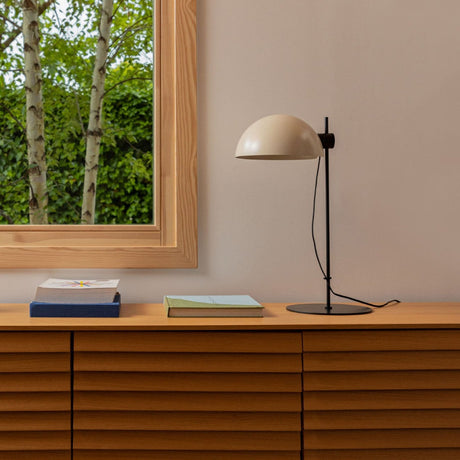
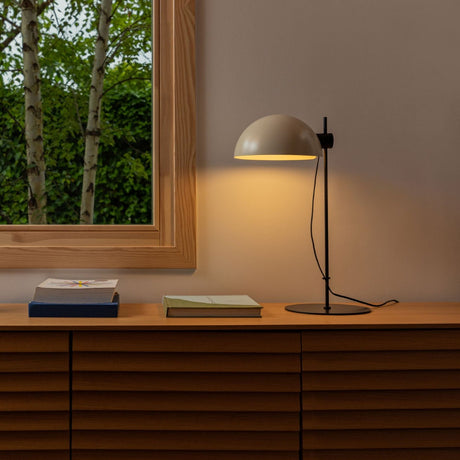
- The industrial style is exposed metal, matte finish, and visible structure. In our catalog, 66% contain steel and 60% are black.
- What has changed in the last year: more black (+13.6 points), more wood, the appearance of blue and brass, and manufacturers have stopped including the bulb.
- For a warehouse or workshop, what you are looking for is an LED high bay, not a decorative lamp. Starting at €61.28 for 21,000 lm.
- We have 2,261 industrial-style lamps available, with a median price of €160.00.
1. Two different things with the same name
This is the confusion that causes the most incorrect orders, and it is best to resolve it before looking at any lamp.
The industrial style was born from bringing the aesthetic of early 20th-century factories into the home: bare metal, visible screws, plate shades, grids, textile cable. It is decoration. It goes in living rooms, kitchens, and bedrooms, and provides between 400 and 3,000 lumens.
True industrial lighting is a different category: LED high bays, projectors, and watertight strips for warehouses, workshops, and garages. It is bought by lumens and beam angle, not by finish. It provides between 15,000 and 30,000 lumens per unit.
If you are looking for «industrial lighting» for a warehouse, skip to section 5. If you are looking for your home, keep reading from here.
2. What the industrial style is, materially
It is not an impression: it is measurable. Out of the 1,823 indoor industrial lamps we have available right now, this is what they are made of:
| Material | Presence |
|---|---|
| Steel | 66% |
| Metal (generic) | 37% |
| Aluminum | 22% |
| Textile | 16% |
| Glass | 15% |
| Iron | 13% |
And this is how the colors are distributed: black 60%, white 27%, beige 9%, gold 8%, wood 7%. In finish, matte 28% versus gloss 8%.
The conclusion is direct: industrial is matte black steel. Everything else is a variation. If you are doubting between two lamps and one is matte black metal, that is the one that fits the style; the other is a lamp that resembles it.
3. What has changed in the last year
There is a data point here that is a trend and not an opinion. We compared industrial lamps added since September 2025 (1,060 references) against the previous catalog background (1,528):
| Recent additions | Previous background | Difference | |
|---|---|---|---|
| Black | 60.6% | 46.9% | +13.6 |
| White | 19.2% | 29.5% | −10.3 |
| Wood | 11.9% | 7.7% | +4.2 |
| Blue | 10.5% | 0.4% | +10.1 |
| Brass | 5.0% | 0.1% | +4.9 |
| Beige | 3.3% | 11.1% | −7.8 |
Four conclusions:
- Black is reinforced. It was already the majority and has gained almost fourteen points. If you buy matte black, you buy what the market is producing, and in three years there will still be spare parts and matching pieces.
- Blue enters from scratch. It goes from 0.4% to 10.5%: it is the real chromatic novelty of the year. Deep blue with brass details is the combination that manufacturers are pushing.
- Wood grows and softens the style. Pure bare-metal industrial is being mixed with oak and walnut—the boundary with the Nordic style is deliberately blurring.
- Neutral filler tones are leaving: white and beige give up ten and eight points respectively.
And a change that is not color-related: integrated LED goes from 42.5% to 50.8%, and lamps that came with a bulb included have fallen from 13.0% to 0.1%. In practice: if you buy an industrial lamp with an E27 socket, expect to buy the bulb separately. Almost none include it anymore.
4. Room by room
Living room and dining room. The pendant over the table is the piece that defines the room. We have 683 industrial pendants, median €316.40. The height rule does not change due to the style: the lower edge should be 75–85 cm above the tabletop.
- Trio Marley rusty metal pendant — €23.93. The most affordable industrial: sheet metal, rust finish, E27.
- LedsC4 Noway Small LED black CCT dimmable — €316.40. Integrated LED and switchable temperature.
- Mantra Jarras bronze pendant Ø30 cm — €316.95.
- Faro Tatawin 3-light black — €490.00. Rod structure: high-end industrial.
Walls. The industrial wall lamp is what has grown the most: 506 references, median €91.95. It is also the cheapest way to put the style in a house without touching the ceiling.
- Faro Sole GU10 LED white wall lamp — €14.99.
- Faro Flin with matte black LED reading light 3,000 K — €54.99. With reading arm: for the headboard of the bed.
- Mantra Cayman satin nickel LED reading wall lamp — €91.95.
- Faro Orleans 3-light matte black — €91.99.
Ceiling without a pendant. If the ceiling is low or the passage is narrow, use a ceiling light: 209 industrial ceiling lights, median €209.00.
- Mantra Zero II white ceiling light — €26.95.
- EGLO Marghera 1 dimmable LED ceiling light — €209.00.
Tables and floor. 184 table lamps (median €130.99) and 140 floor lamps (median €260.00).
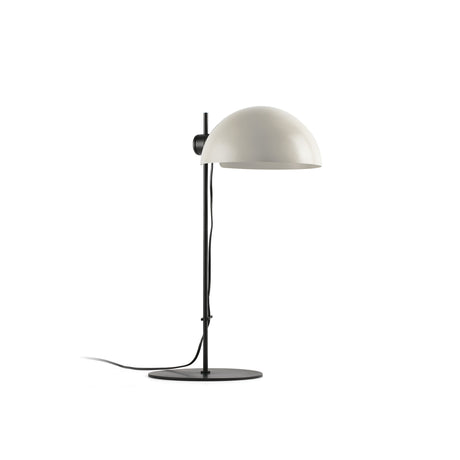
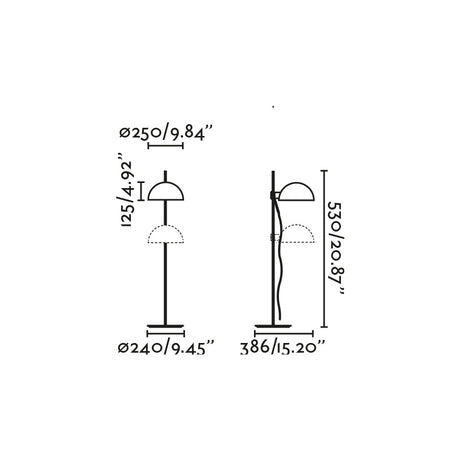
- Trio Diallo matte black metal table lamp 51 cm — €28.99.
- Mantra Desigual black iron floor lamp 160 cm — €84.81.
- Faro Black black floor lamp Ø36 cm — €103.99.
- Faro Savoy black table lamp — €130.99.
Outdoor. 244 industrial outdoor references, median €142.75. Here the style works especially well because metal and matte black were already the language of the outdoors.
Catalogs: industrial lamps · ceiling lamps · wall lamps · kitchen pendants · black pendants
5. If you have a warehouse, a workshop, or a garage
This is no longer decoration. What you need is called an LED high bay, and it is chosen with three data points:
Lumens. A 150 W LED high bay gives about 21,000 lm. As a guide, a workshop requires around 300 lux in the work area; for a 200 m² warehouse with a 6 m ceiling, that means several units, not just one.
Beam angle. This is the data that almost no one looks at, and it is what decides the result:
- 60° — high ceilings (over 6 m). Focuses light downwards to reach the floor.
- 90° — medium ceilings.
- 120° — low ceilings (3–4 m). Spreads wide so there are no dark zones between high bays.
With a low ceiling and a narrow angle, you will see separated circles of light; with a high ceiling and a wide angle, you will lose light against the walls.
Temperature. 4,000 K for general work; 5,000 K where it is necessary to distinguish detail or color.
The Mantra Urano 150 W LED high bay is €61.28 and exists in all three openings—60°, 90°, and 120°—and in 4,000 K and 5,000 K. Choosing the correct variant matters more than the price.
6. Five frequent mistakes
- Buying a decorative lamp for a warehouse. A nice industrial pendant gives 600 lm. A warehouse needs thirty times that.
- Choosing the high bay without looking at the angle. This is the expensive mistake: the correct unit with the wrong opening provides poor lighting and cannot be fixed.
- Taking for granted that the bulb is included. In recent year's additions, it is included in 0.1% of cases.
- Mixing metal finishes. Matte black with bright chrome is not industrial: it is an accident. Choose one family and maintain it throughout the room.
- Putting cold light in the living room because "it is industrial." The style is the finish, not the temperature. In a home, 2,700–3,000 K even if the lamp is made of steel.
Frequently asked questions
What characterizes the industrial style in lighting?
Exposed metal, structure and screws not hidden, and matte finish. Measured against our catalog: 66% of industrial lamps contain steel, 60% are black, and the matte finish triples the glossy one. Plate shades, grids, and visible textile cables are the other common features.
What is the difference between an industrial-style lamp and an industrial luminaire?
The first is decoration for the home and provides between 400 and 3,000 lumens. The second—LED high bays, projectors, watertight strips—is technical equipment for warehouses and workshops, and provides between 15,000 and 30,000 lumens. They share a name but share nothing else.
What colors are popular in industrial lighting in 2026?
Black remains dominant and has been reinforced: it goes from 46.9% to 60.6% among references added in the last year. The real novelties are blue (from 0.4% to 10.5%) and brass (from 0.1% to 5.0%), and mixing with wood is growing (from 7.7% to 11.9%). White and beige are receding.
How many lumens does an industrial warehouse need?
It depends on the activity and the height, but as a guide, you work with about 300 lux in the work area. A 150 W LED high bay provides about 21,000 lm; the number of high bays and their separation depend on the ceiling height and the beam angle you choose.
Which LED high bay angle should I choose?
60° for ceilings over 6 m, 90° for medium ceilings, and 120° for ceilings from 3 to 4 m. With a low ceiling and a narrow angle, separated circles of light appear; with a high ceiling and a wide angle, light is lost against the walls.
Do industrial lamps come with a bulb?
Almost none do now. Among the references added since September 2025, only 0.1% include a bulb, compared to 13.0% in the previous catalog. Approximately half have integrated LED—they do not need a bulb—and the rest have E27 or GU10 sockets, and you have to buy the bulb separately.